More Than Mud: Hands in the Earth, Minds in Motion


With water accumulated in the front yard, children at know school experienced playing the games that are to be explored in this season. Let it be making paper boats and putting them in the flowing water, getting wet in the rain, playing with the mud and so on. It is not just the playing that they were experiencing, they were learning about one of the important element of nature - Water.
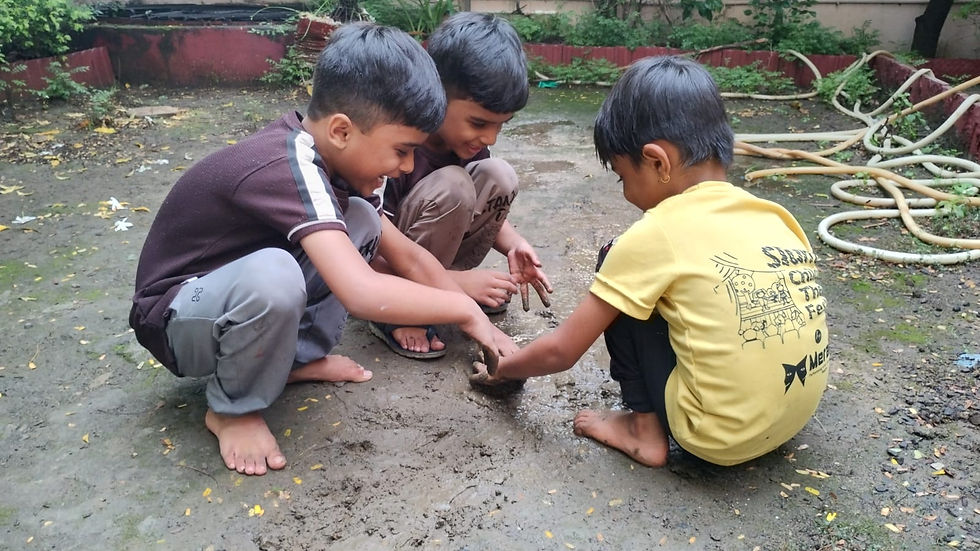
Malhar ( 7 yr ), Martand ( 7 yr ) and Purab ( 6 yr ), were at Know school when it started pouring outside. They took this chance for these experiments and exploration to the fullest. There’s something timeless about children squishing their hands into wet mud digging, shaping, mixing, and feeling the earth between their fingers. It's not just messy play, it’s a powerful learning experience rooted in nature.

Wet mud serves open - ended exploration. Children pour, pat, stamp, and mold it into forms of their own making developing fine and gross motor skills in the process. As they dig trenches or make pretend food, they are learning about texture, moisture, consistency, weight, and balance. These early, hands-on experiences lay the foundation for thinking and problem-solving.

Mud is a rich sensory material. It engages sight, touch, and smell helping children regulate emotions, relax, and connect with the natural world. It’s especially valuable for children who learn through tactile and sensory experiences. Playing with mud can calm an anxious child, spark joy in a restless one, and anchor attention in the present moment. Whether it's making mud pies, building tiny mud houses, or running their fingers through puddles, children engage in pretend play. When done in groups, mud play becomes collaborative. They negotiate roles, share tools, solve problems, and invent games together developing essential social and communication skills.

For a child, it’s a deeply immersive learning process. Know School, encourages exploration without fixed outcomes, wet mud play becomes a meaningful part of a child’s self-directed growth.
Growth doesn’t always come from clean worksheets and tidy activities. Sometimes, it comes from the freedom to get muddy, to feel the earth, and to lose oneself in joyful, grounded play. Mud isn’t just dirt and water, it’s a medium of expression, discovery, and connection.
Comments